
One melanger. Several product categories
Chocolate, nut butters, praline and fillings usually mean four different machines. The idea behind the melanger is simpler: one refining logic, driven by stone geometry and time, that turns raw cocoa beans, nuts, seeds and fat-based ingredients into smooth, stable products — with the recipe, texture and cost staying entirely in your hands.
Chocolate
Bean-to-bar, dark, milk, vegan.
Nut butters
Hazelnut, peanut, pistachio, almond.
Praline
Fillings for bonbons and bars.
What a melanger actually does
Granite or steel stones roll slowly over a rotating bowl, crushing particles down and coating them evenly in fat. That's the whole trick: refine the particle size until the mouth stops noticing grit, and mix long enough that the result holds together instead of separating. Everything else — chocolate's snap, a nut butter's pour, a praline's bite — comes from how that one process is tuned.
How the process runs
The machine carries the long, repetitive part of the work. The operator's job is to make good decisions at a handful of points, not to stand over the bowl for hours.
- 01Weigh the ingredients.
- 02Load them into the bowl in the right sequence.
- 03Start the melanger.
- 04Let the stones refine and mix the mass.
- 05Check texture if needed.
- 06Unload the finished product.
Where the real cost lever sits
That's the point worth sitting with: the biggest cost lever is not the machine, it's the raw material. A melanger doesn't change what cocoa or nuts cost — it changes how much of that ingredient value you get to keep, by moving the refining step inside your own production instead of buying it pre-made.
A melanger lets you move closer to the raw material — and build value inside your own production.
When a melanger stops being optional
A melanger isn't just a refining machine. It becomes a production decision the moment you need to control cost, recipe, texture and labor at the same time — and a few thresholds tend to make that moment obvious.
Up to around 10 tonnes a month, a melanger-based workflow gives predictable output and controlled cost per kilogram.
One trained operator can load, monitor and unload without standing at the machine for the entire cycle.
Chocolate, nut pastes, praline and fillings can all run on the same equipment logic.
Taste, texture and ingredients can be adjusted in-house, batch to batch.
A finer result around 15 microns or a more pronounced one around 30 — the choice depends on the recipe and application.
Value shifts from ready-made ingredients into your own production process.
Design details that carry the idea through
The concept only holds up if the machine behaves predictably on a real production floor, not just on paper. A few details do most of that work:
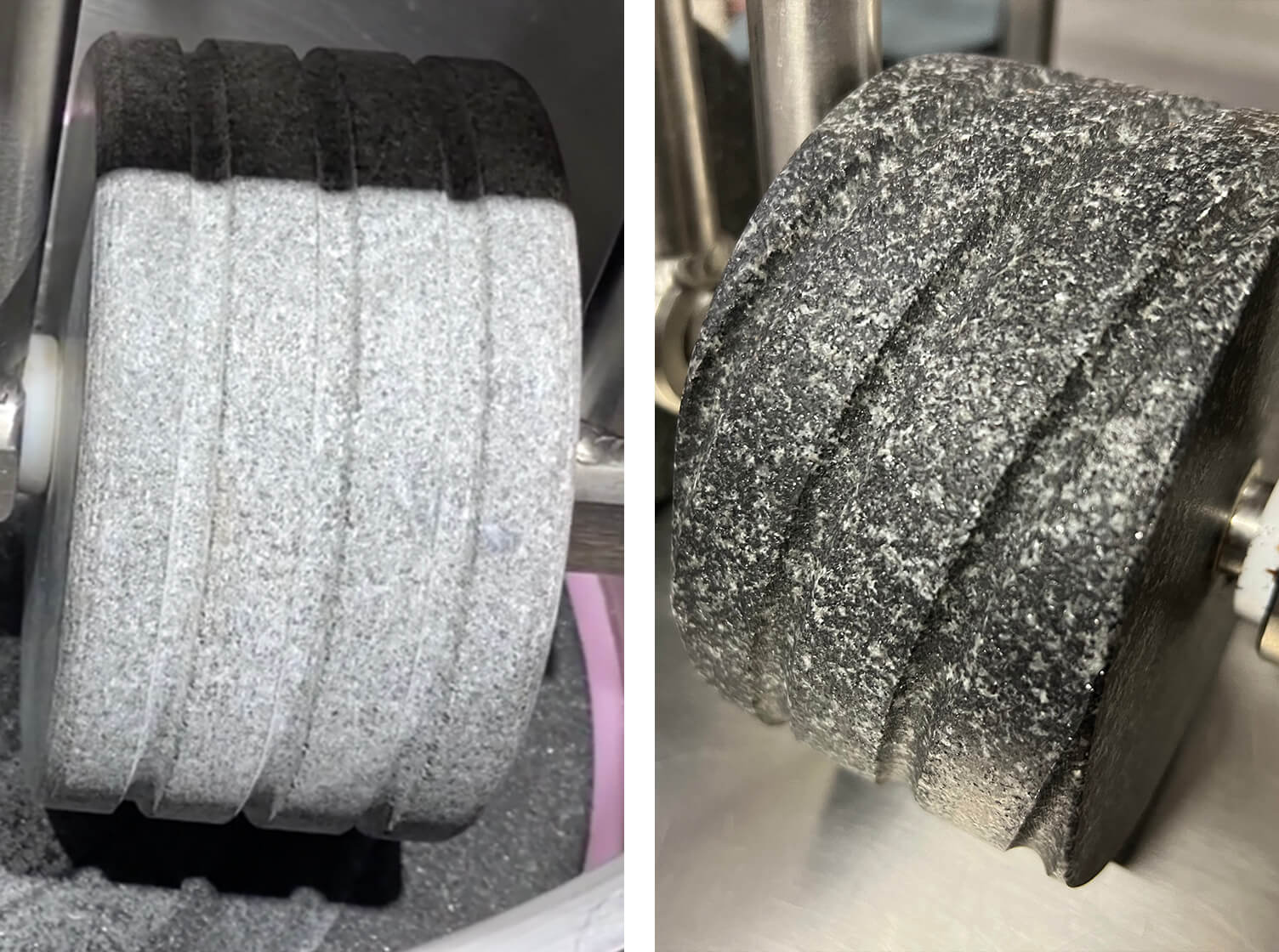
Spiral grooved stones
The groove directs the mass under the stones, increasing contact with the working surface — more efficient refining and a more consistent texture, especially for dense, fat-based masses.
Reverse movement
Dense masses can resist during start-up. Running the stones in reverse helps release them and cuts the risk of jamming — easier starts, less downtime, less load on the operator.
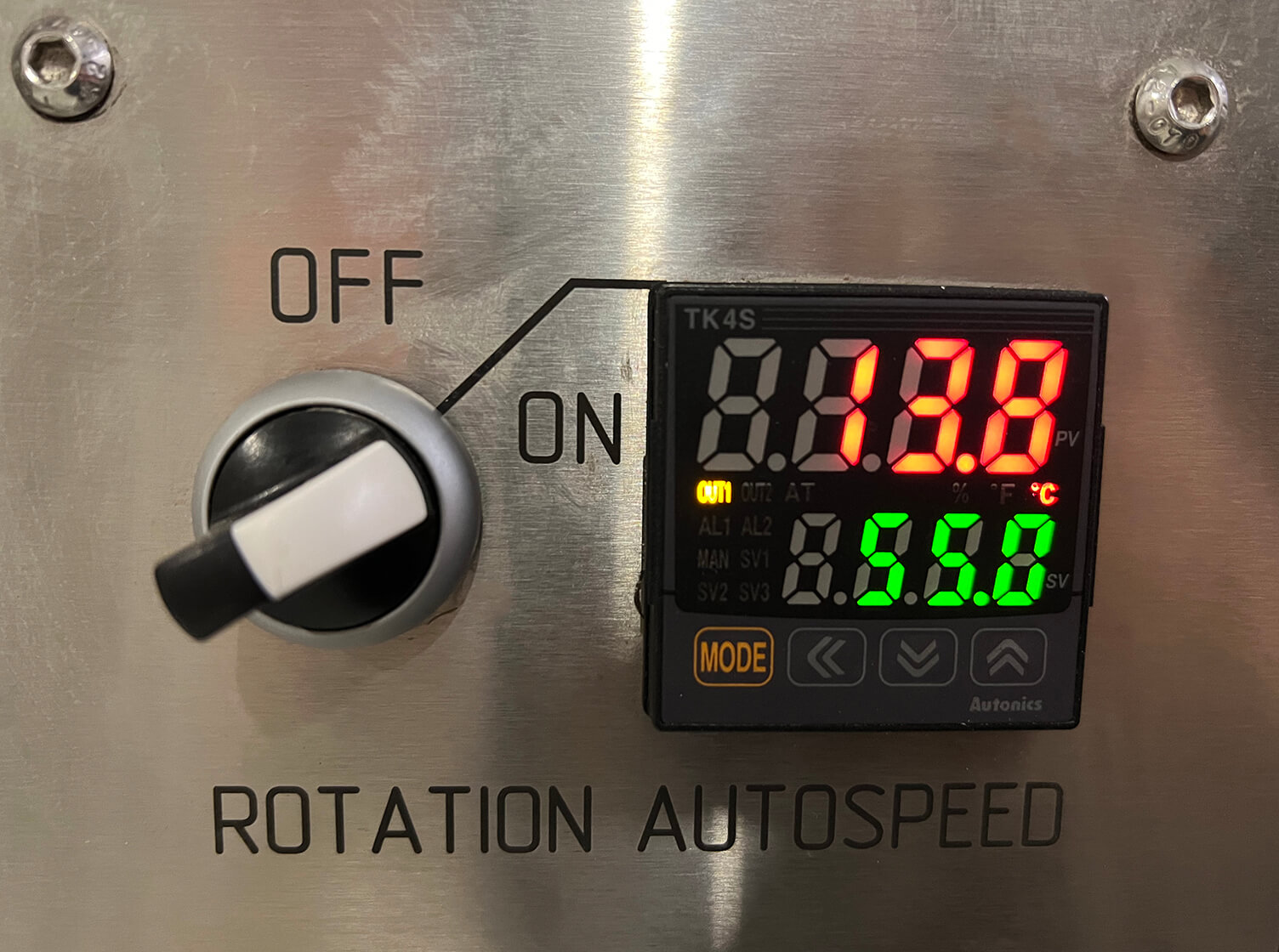
Temperature control
Overheating shows up in flavor and texture before anything else. Keeping the mass in its intended range is what makes chocolate, nut pastes and fillings repeatable batch after batch.
An operator-friendly workflow
Simple loading, a manual tilt for unloading, easy access for cleaning — the goal is that one trained person can run the melanger as one part of a wider production day, not the only thing they do.
Model range, at a glance
| Model | Best for | Loading capacity |
|---|---|---|
| Melanger 7 kg | R&D, recipe testing, pilot batches | 4–7 kg |
| Melanger 20 kg | Small-batch production, open kitchens | 12–20 kg |
| Melanger 35 kg | Professional daily production | 20–40 kg |
| Melanger 65 kg | Growing production needing more volume | 40–65 kg |
| Melanger 85 kg | Continuous, multi-recipe scaling | 50–90 kg |
The idea underneath all of it stays the same across every size: one machine, one refining logic, several product categories — and the recipe, texture and cost of what comes out of it are yours to decide.
 Sending...