
In chocolate production, melting is not just a preliminary step. It directly affects viscosity, tempering stability, surface gloss, snap, and shelf life.
Although melting chocolate may appear simple, improper heat control can damage cocoa butter crystal structure, scorch milk solids, increase viscosity, and create problems later during tempering or molding.
The correct melting method depends on production volume, required temperature precision, and workflow efficiency.
Recommended Chocolate Melting Temperatures
| Chocolate Type | Recommended Temperature |
|---|---|
| Dark Chocolate | 45–50°C |
| Milk Chocolate | 40–45°C |
| White Chocolate | 38–42°C |
White and milk chocolate are especially sensitive to overheating because of their milk solids and sugar content. Excessive heat can cause scorching, grainy texture, flavor degradation, or unstable viscosity.
1. Bain-Marie (Double Boiler)
Best for: Home use and very small batches
Typical capacity: 0.5–2 kg
The bain-marie is the most common beginner method for melting chocolate. A bowl containing chocolate is placed above simmering water, allowing indirect heat to melt the product gradually.
In practice, process control is difficult. The bottom of the bowl can easily exceed 80°C, especially if it touches the water directly. This creates a high risk of overheating delicate milk or white chocolate.
Another major risk is moisture contamination. Even a single drop of water can cause chocolate to seize, dramatically increasing viscosity and destroying flowability.
- Keep the bowl 2–3 cm above the water
- Stir continuously
- Avoid steam contact
- Ensure all tools are completely dry
While this method is acceptable for hobby use or restaurant plating, it is not suitable for professional chocolate production.
2. Microwave Oven
Best for: Small batches, decorations, test samples
Typical capacity: 0.2–1 kg
Microwaves offer fast and convenient melting but provide uneven heat distribution.
Localized hot spots develop quickly, meaning one section of the chocolate may overheat while another remains solid.
- Heat in short 15–30 second intervals
- Stir thoroughly after every cycle
- Reduce heating time as the chocolate approaches melting point
Continuous mixing is essential because it redistributes heat throughout the mass and prevents localized scorching.
3. Oven or Combi-Steamer
Best for: Pre-melting medium and large quantities
Typical capacity: 1–10 kg
Many professionals use ovens as a low-labor solution for pre-melting chocolate overnight.
Chocolate is placed in a heat-resistant container and held at approximately 40–45°C for several hours.
In combi-steamers, the steam function must be completely disabled. Excess humidity will immediately cause chocolate to seize.
Additionally, many ovens provide inconsistent airflow, which may create uneven melting across the batch.
The method is practical for bulk preparation but unsuitable for precision temperature control.
4. Chocolate Melters
Best for: Pastry shops, confectionery labs, boutique production
Typical capacity: 1–20 kg
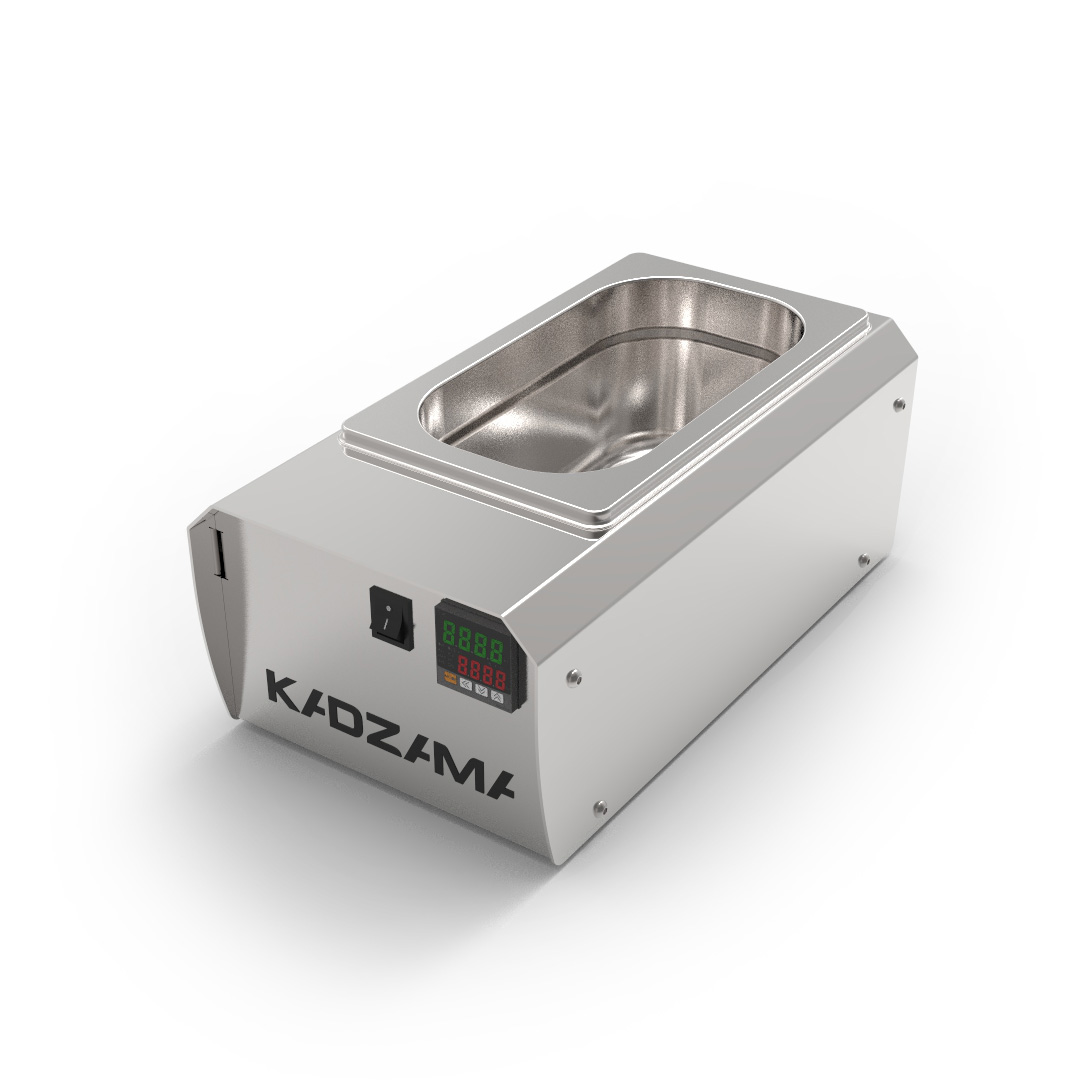
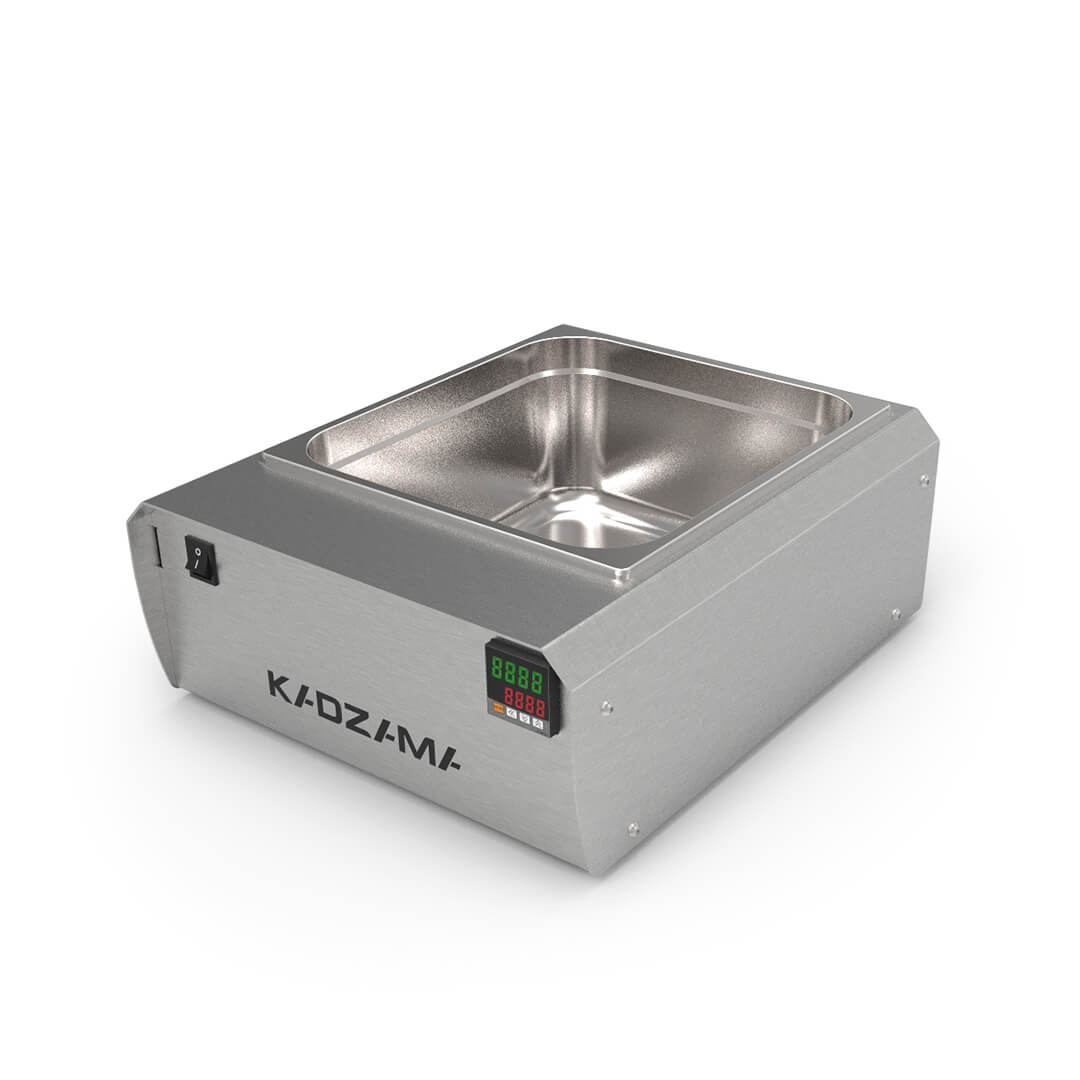
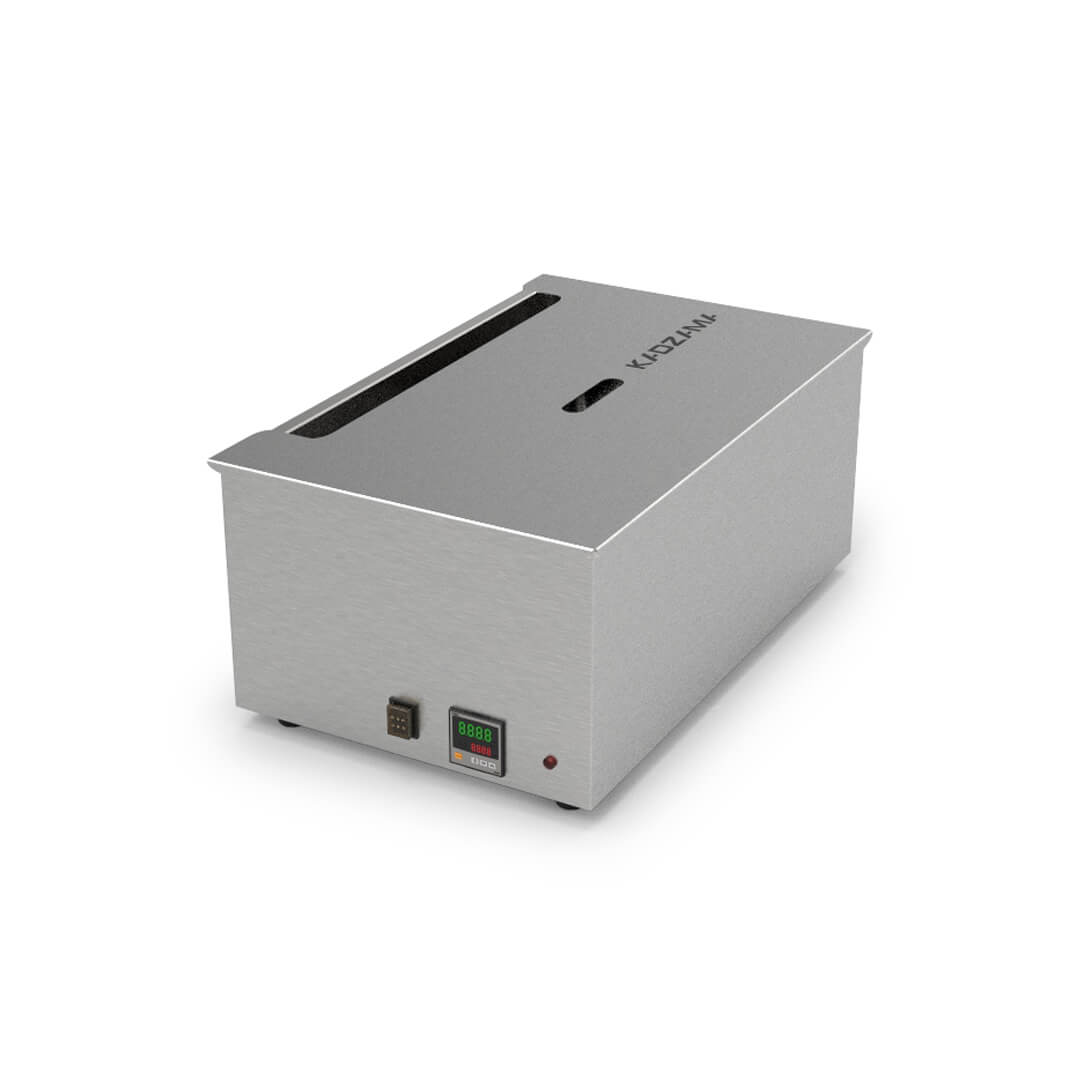
Professional chocolate melters are the industry standard for small and medium-scale chocolate production.
Their primary function is to melt chocolate gently and maintain a stable working temperature with minimal operator intervention.
Typical melting time ranges from 1 to 4 hours depending on batch size, ambient temperature, and chocolate type.
A high-quality melter should provide stable temperature control with minimal fluctuation. This is critical because tempering often requires precision within fractions of a degree.
Professional systems use digital temperature controllers, distributed heating elements, insulated tanks, and food-grade stainless steel construction.
In advanced melters, infrared heating elements are positioned not only beneath the tank but also along the side walls. This improves heat distribution and minimizes localized overheating.
Stainless steel remains the preferred material because it:
- Resists corrosion
- Simplifies cleaning
- Maintains food safety standards
- Supports consistent thermal transfer
Additional features may include mixers, programmable settings, drainage taps, and wheel systems.
5. Industrial Melting Tanks
Best for: Industrial chocolate manufacturing
Typical capacity: 100 kg and above
Industrial melting tanks are designed for continuous large-scale chocolate processing.
The most important feature of these systems is indirect water-jacket heating, which minimizes thermal shock and reduces the risk of localized overheating.
This is essential for preserving viscosity, flavor profile, and cocoa butter crystal stability.
Continuous agitation maintains homogeneous temperature distribution throughout the entire mass and prevents cocoa butter separation.
Once melted, chocolate can be pumped directly into tempering or depositing equipment without manual transfer.
6. Tempering Machines
Best for: Continuous high-volume production
Typical capacity: 20–60 kg and above
Technically, chocolate can be melted directly inside a tempering machine. However, using a tempering system exclusively for melting is often inefficient.
Automatic tempering machines are designed for continuous production workflows rather than simple liquefaction.
They become economically justified when production requires continuous tempering, high throughput, automated dosing, or multi-shift operation.
How to Choose the Right Chocolate Melting Method
| Production Scale | Recommended Method |
|---|---|
| Home use | Bain-marie or microwave |
| Small pastry shop | Chocolate melter |
| Boutique chocolate production | Professional melter |
| Industrial manufacturing | Melting tank + tempering system |
The goal is not simply to melt chocolate. The goal is to maintain stable temperature control, protect crystal structure, and create a predictable production process.
Final Thoughts
Chocolate melting is a critical technological stage, not a minor preparation step.
Poor melting practices create problems throughout the entire production chain — from tempering instability to poor surface finish and reduced shelf life.
The best melting method is the one that matches your production volume, workflow, and precision requirements.
If you want to learn how to choose a professional chocolate melter and avoid common purchasing mistakes, read our guide: How to Choose a Chocolate Melter
 Sending...