
Criollo, Forastero and Trinitario are not enough for a purchase decision. They are market shorthand, not a full technical specification.
Before buying volume, check the actual lot: sampling, moisture, cut test, odour, shell percentage, roast response, liquor taste, particle size target, viscosity after refining and conching, and pilot-batch behaviour.
Before buying volume, check the actual lot: sampling, moisture, cut test, odour, shell percentage, roast response, liquor taste, particle size target, viscosity after refining and conching, and pilot-batch behaviour.
The Variety Name Is Only the First Filter
Criollo, Forastero and Trinitario are still useful words in trade conversations. They tell you what kind of cocoa the supplier claims to offer and what flavour direction may be expected.
They do not tell you whether the lot is usable.
Modern cacao genetics has moved beyond the old three-type model. Research has identified multiple genetic clusters, while the cocoa trade often works with a more practical distinction: fine or flavour cocoa versus bulk cocoa.
Even that split has exceptions. Some Forastero-type cocoas can be fine flavour; some Trinitario-type cocoas are traded as bulk.
For production, the better starting point is not “Criollo or Trinitario?” but:
- What product are we making?
- What defects can this product tolerate?
- What process data do we have for this lot?
- Can the supplier repeat the quality?
A 72% single-origin bar, a milk shell, a hazelnut filling and a bakery chocolate need different cocoa decisions.
Quick Working Comparison
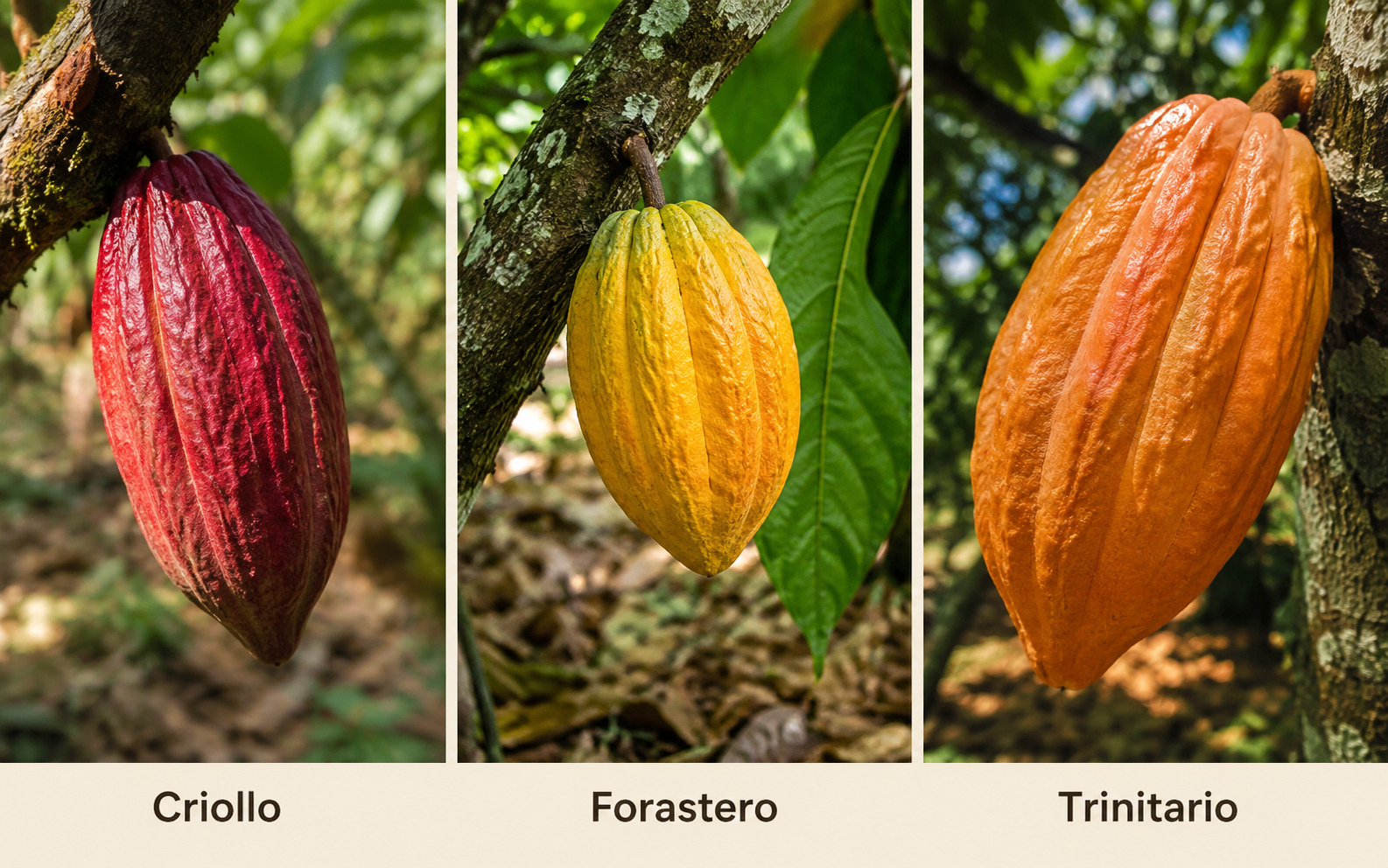
| Production question | Criollo-type cocoa | Forastero-type cocoa | Trinitario-type cocoa |
|---|---|---|---|
| Why consider it? | Delicate aroma, low bitterness, premium sensory profile | Volume, cocoa body, supply continuity, cost control | Premium flavour with more practical sourcing |
| First thing to verify | Authenticity, fermentation, mould, slaty beans | Cleanliness, bitterness, smoke, shell percentage | Actual lot profile, not category name |
| Where it usually fits | Fine bars, limited editions, tasting-led products | Blends, bakery, coatings, fillings, large batches | Bean-to-bar ranges, premium bars, scalable craft production |
| Main risk | Paying for rarity that disappears in process | Treating “industrial” as permission to accept defects | Assuming Trinitario automatically means fine chocolate |
| Must-test point | Aroma after roasting and conching | Defects, nib yield and bitterness | Finished chocolate, not just nibs |
Criollo: Do Not Pay for the Name Until the Lot Passes the Bench
Criollo-type cocoa can be excellent in a fine dark bar. A clean lot may show floral notes, honey, nuts, dried fruit or soft red fruit with less aggressive bitterness than many bulk lots.
That is useful only if the lot is clean.
For a premium bar, reject a Criollo-type lot with visible mould, strong smoke odour, heavy slaty beans or harsh acidity that stays in the liquor after roasting. The defect will not become elegant because the label says Criollo.
The roast should also be restrained. If the buyer pays for delicate aroma, a heavy roast can remove the value. A trial should check the same lot at least in nibs, liquor and finished chocolate.
Criollo-type cocoa is usually justified when:
- the product is a premium dark bar or tasting-led line;
- the lot volume is small enough to manage separately;
- the supplier can explain origin, harvest and post-harvest handling;
- the finished chocolate sells the aroma, not only the origin story.
It is usually weak economics for bakery, strongly flavoured fillings or very sweet milk recipes.
Forastero: Useful Cocoa, But Bad Lots Should Still Be Rejected
Forastero-type cocoa is often treated as the industrial option. That is not a problem by itself. A clean Forastero-type lot can be exactly right for chocolate that needs cocoa body, stable supply and predictable cost.
The problem starts when “industrial” becomes an excuse for poor raw material.
Mould, smoke contamination, insect damage and heavy slaty content are not solved by conching. They become sorting loss, flavour correction, extra cocoa butter, extra sugar, complaints or rejected batches.
Forastero-type cocoa often works well for:
- bakery chocolate;
- fillings;
- coatings;
- compound-style applications where allowed;
- milk chocolate with strong cocoa body;
- blends where consistency matters more than single-origin nuance.
Incoming control should be strict: odour, moisture, cut test, bean count, shell percentage, test roast and liquor tasting. If the lot is cheap but gives poor nib yield or high shell carryover after winnowing, the real cost is not cheap.
Trinitario: Good Starting Point, Still Too Broad to Buy Blind
Trinitario-type cocoa is often the most practical premium category for a growing chocolate factory. It can give fruit, nuts, floral notes or rounded cocoa body with better availability than rare Criollo-type lots.
But Trinitario is a broad hybrid category. Two lots can behave completely differently.
One may become clean and expressive after a medium roast. Another may stay acidic, thick or flat after conching. A third may be sold as premium but behave like ordinary bulk cocoa in the finished bar.
For Trinitario, tasting raw nibs is not enough. Run the lot through a small version of the real process:
- roast;
- crack and winnow;
- measure nib yield;
- refine;
- conche;
- check viscosity;
- temper;
- mould;
- taste after crystallisation and again after several days.
If the lot loses aroma after conching or becomes difficult to process at the target recipe, the category name no longer matters.
Moisture: Specify the Number and the Method
For fermented and dried cocoa beans, a practical target is often around 6.5–7.5% moisture. Around 7.5% is widely treated as suitable for storage; near or above 8%, mould and rehumidification risk become more serious.
Do not write only “max 8%” in a contract. Specify:
- target range;
- maximum allowed value;
- measurement method;
- sampling method;
- when the measurement is taken;
- what happens if bags arrive above specification.
For cocoa, use a cocoa-relevant standard or agreed laboratory oven method. If a handheld moisture meter is used at intake, it should be calibrated against the agreed reference method.
Practical intake check: measure several bags, not only the cleanest sample. Moisture can vary inside a shipment, especially after humid storage or container transport.
If moisture is too high, mould and OTA risk become more important. If it is too low, beans can become brittle, create more fines and make winnowing less clean.
Cut Test: Put Defect Thresholds in the Specification
The cut test should classify the beans, not just confirm that “they look fine.”
At minimum, record:
- well-fermented beans;
- slaty beans;
- purple or under-fermented beans;
- mouldy beans;
- insect-damaged beans;
- germinated or flat beans;
- smoky or abnormal odour.
For fine chocolate, tolerance should be tighter than for bulk industrial use. A useful purchasing specification should define maximum allowed percentages for mould, slaty beans and insect-damaged beans. Generic “good quality” language is not enough.
Mould is critical for almost any product. Heavy slaty content is especially damaging for fine dark bars because it often brings weak fermentation, bitterness and poor flavour development. Smoke is a serious problem for delicate chocolate; phenolic notes fr om fire drying are difficult to remove later.
Add photo examples to supplier agreements when possible. “Slaty” and “purple” are not always interpreted the same way by every seller.
Mycotoxins and Food Safety: Do Not Treat Mould as Only a Flavour Problem
Mould is not only a sensory defect. It can indicate increased risk of mycotoxins, including ochratoxin A and, depending on origin and storage conditions, aflatoxin concerns.
The practical rule for B2B buying is simple: if moisture, storage or origin risk is high, request a Certificate of Analysis that includes relevant microbiology and mycotoxin testing according to the target market and customer requirements.
The contract should define:
- which mycotoxins are tested;
- analytical method;
- maximum accepted limits;
- who pays for retesting;
- what happens if the lot fails.
Do not rely on “looks dry” or “smells acceptable” for high-risk shipments.
Shell Percentage and Real Cost
Price per tonne is not the same as cost per usable kilogram.
The shell is normally a significant non-edible fraction of the bean. Higher shell means less edible nib. It can also mean more winnowing difficulty. If shell fragments remain in the nib fraction, bitterness, astringency and gritty perception can increase.
Calculate cocoa cost like this:
real nib cost = bean price / usable nib yield
Then adjust again for:
- sorting loss;
- roasting loss;
- shell carryover;
- nib loss during winnowing;
- rejected material;
- extra cocoa butter needed for viscosity correction.
For a serious purchase, test 25–50 kg if possible. A tiny sample can show flavour, but it will not give reliable data on winnowing, shell percentage and process loss.
Particle Size: Use D90, Not Only an Average
“18 microns” sounds precise, but it is often incomplete.
For chocolate texture, the larger particles matter because they are the ones the mouth detects. Laser diffraction results are usually read through values such as D50 and D90. D90 means 90% of particles are below that size.
For a smooth premium bar, a useful target may be D90 below about 25 µm, depending on recipe and measurement method. For fillings or bakery applications, a slightly coarser profile may be acceptable if the product does not feel gritty and the process runs better.
Over-refining creates another problem. Too many fines increase surface area, so the mass can become thick and need more cocoa butter or emulsifier. That affects cost, dosing, enrobing, moulding and pumpability.
A production specification should include:
- particle size method;
- D90 target;
- acceptable percentage above 30 µm, if used;
- viscosity or yield value at a defined temperature;
- product application: bar, filling, coating or bakery.
Do not set particle size without checking viscosity.
Viscosity After Refining and Conching
Bean choice affects viscosity indirectly through fat content, particle shape, fibre, shell carryover and the way solids break down during refining.
For production, the useful measurement is not “the chocolate feels fluid.” Define the test:
- temperature, often 40°C for molten chocolate rheology;
- instrument or viscometer method;
- shear conditions;
- viscosity range;
- yield value, if relevant;
- measurement point: after refining, after conching, after holding.
A liquor that tastes good but creates excessive viscosity may require more cocoa butter, different lecithin dosing, longer conching or a revised particle size target. That changes cost and equipment load.
For a new cocoa lot, measure viscosity after refining and again after a defined conching time. If the mass is already too thick after refining, conching will not magically make the economics better.
Roasting: Record the Profile, Not Just the Result
A pilot roast should be documented.
Minimum useful data:
- batch size;
- charge temperature;
- time-temperature curve;
- end temperature;
- roast loss by weight;
- colour change, if measured;
- sensory notes for nibs and liquor.
For delicate Criollo-type cocoa, the question is whether the aroma survives. For harsher bulk cocoa, the question is whether acidity and bitterness soften enough without creating burnt notes.
A supplier sample that works only under one fragile roast profile may be risky for larger production. Repeatability matters.
Purchase Checklist for B2B Cocoa Lots
Before committing to volume, request or generate:
- origin and region;
- harvest season;
- fermentation method and duration;
- drying method;
- moisture result and method;
- cut test result with photos;
- bean count;
- shell percentage or winnowing trial result;
- fat content, if available;
- pH or acidity data, if relevant;
- CoA with microbiology/mycotoxins wh ere needed;
- fumigation or container treatment records;
- packaging type;
- available repeat volume;
- 25–50 kg trial quantity for processing tests.
For larger contracts, define rejection thresholds. Without thresholds, “premium cocoa” is only a description, not a quality agreement.
Choosing by Product Type
Fine Dark Bar
Use Criollo-type or high-quality Trinitario-type cocoa only if the cut test is clean and the finished chocolate proves the aroma.
Reject mould, strong smoke, heavy slaty content and harsh acidity that stays after roasting. These defects are too visible in a high-cocoa bar.
Milk Chocolate
Milk can soften acidity and bitterness, but it also covers delicate notes. A rare Criollo-type lot may not pay back in a sweet dairy-forward recipe.
A rounded Trinitario-type cocoa or clean Forastero-type blend may give better cocoa body, viscosity and cost.
Fillings and Pralines
For fillings, origin character is often less important than compatibility with nuts, cream, fruit, alcohol or spices.
Watch viscosity closely. If fine refining makes the filling base too thick, the issue becomes dosing, texture and shelf stability, not bean prestige.
Bakery and Heat-Treated Products
Heat can erase delicate aroma. For bakery, test the baked product, not only the liquor.
Forastero-type cocoa or blends often make more sense here because the product needs colour, cocoa strength and cost control.
Premium Bean-to-Bar Range
Trinitario-type cocoa is often a practical starting point. It gives room for origin differentiation without relying entirely on scarce micro-lots.
Still, each origin needs its own roast and conch decision. A single standard profile may make production easier but flatten the differences customers are paying for.
Practical Buying Sequence
- Define the product format.
- Define the cocoa’s role: aroma, body, colour, bitterness, roast note or cost base.
- Request lot data before negotiating volume.
- Check sampling method.
- Measure moisture.
- Run cut test with defect categories.
- Smell beans before roasting.
- Roast 1–2 kg for flavour screening.
- Process 25–50 kg if the purchase is serious.
- Measure nib yield and shell separation.
- Refine to the intended D90 target.
- Measure viscosity at the agreed temperature.
- Conche with a recorded curve.
- Temper, mould and taste after rest.
- Calculate real cost per finished kilogram.
- Confirm repeat volume before launching the product.
FAQ
Are Criollo, Forastero and Trinitario real varieties?
They are traditional trade terms, but not a complete modern genetic classification. Current genetics identifies more cacao clusters. In buying, the terms are useful only when supported by lot data and process testing.
What moisture should cocoa beans have?
A common target is around 6.5–7.5%. Around 7.5% is widely treated as suitable for storage; near or above 8%, mould and rehumidification risk become more serious. The contract should define the method and maximum value.
What cut test defects are most serious?
Mould and smoke are critical. Heavy slaty content is a major warning sign for under-fermentation. Insect damage, germination and uneven fermentation also affect value and processing risk.
Should particle size be specified as microns?
Yes, but specify the metric. D90 is often more useful than only an average because coarse particles drive gritty perception. For smooth bars, D90 below about 25 µm is a common practical target, but viscosity must be checked at the same time.
Why does shell percentage matter?
Because the buyer pays for beans but uses nibs. Higher shell percentage lowers edible yield, can increase winnowing loss and may add bitterness or texture defects if shell carries into the nib fraction.
 Sending...